
Cooking Gas (LPG) Retail Plant
Setup a high-margin LPG cooking gas refilling station. Complete cost breakdown, direct depot suppliers, safety compliance, and profit model.

Introduction
Cooking Gas (LPG) Retail Plant — Process & Overview
Market Research
Demand Analysis & Location
Section A — Introduction
Overview of the cooking gas (LPG) retail business and gas plant research findings.

Section B — Market Research
Market demand analysis and opportunities for LPG gas suppliers.
Section C — Pricing & Costs
Full capital breakdown, operating expenses, and profit margins.
Section D — Equipment & Safety
Breakdown of startup costs, pricing strategy, and profit margins.

Section E — Operations & Marketing
Daily operations workflow, customer acquisition, and digital marketing tactics.

Consultation — 1-on-1 Business Strategy
Live 1-on-1 consultation with gas business expert.

Your market
Urban demand is exploding as households switch completely away from kerosene and charcoal. A standard neighborhood plant refills 40 to 80 cylinders daily with net margins of 50% to 70%.
Location & setup
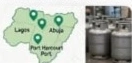
Lagos, Abuja & Port Harcourt, Nigeria
What you need to start
Location
A well-ventilated corner plot or roadside space with at least 15m safety setback
Equipment
Digital cylinder scale, transfer pump, high-pressure filling manifolds, explosion-proof motor
Safety
Fire extinguishers (DCP + CO2), static ground earthing rod, clear safety signage
Licensing
Local fire safety certificate and state NMDPRA retail permit
Initial Stock
At least 500kg to 1,000kg bulk LPG gas from local depot
Guide Documents
Know the numbers. Know your next move.
Go beyond the idea with real detailed information for this business.

Bonus Included: FREE 5-Minute Clarity Session With Me
★ 1-on-1 online guidance • Book within 7 days
Reviews (0)
Be the first to share your experience with this guide.
Unlock this guide to write a review
Purchase or unlock the guide to share your experience